

What It Takes to Become a Wildlife Artist
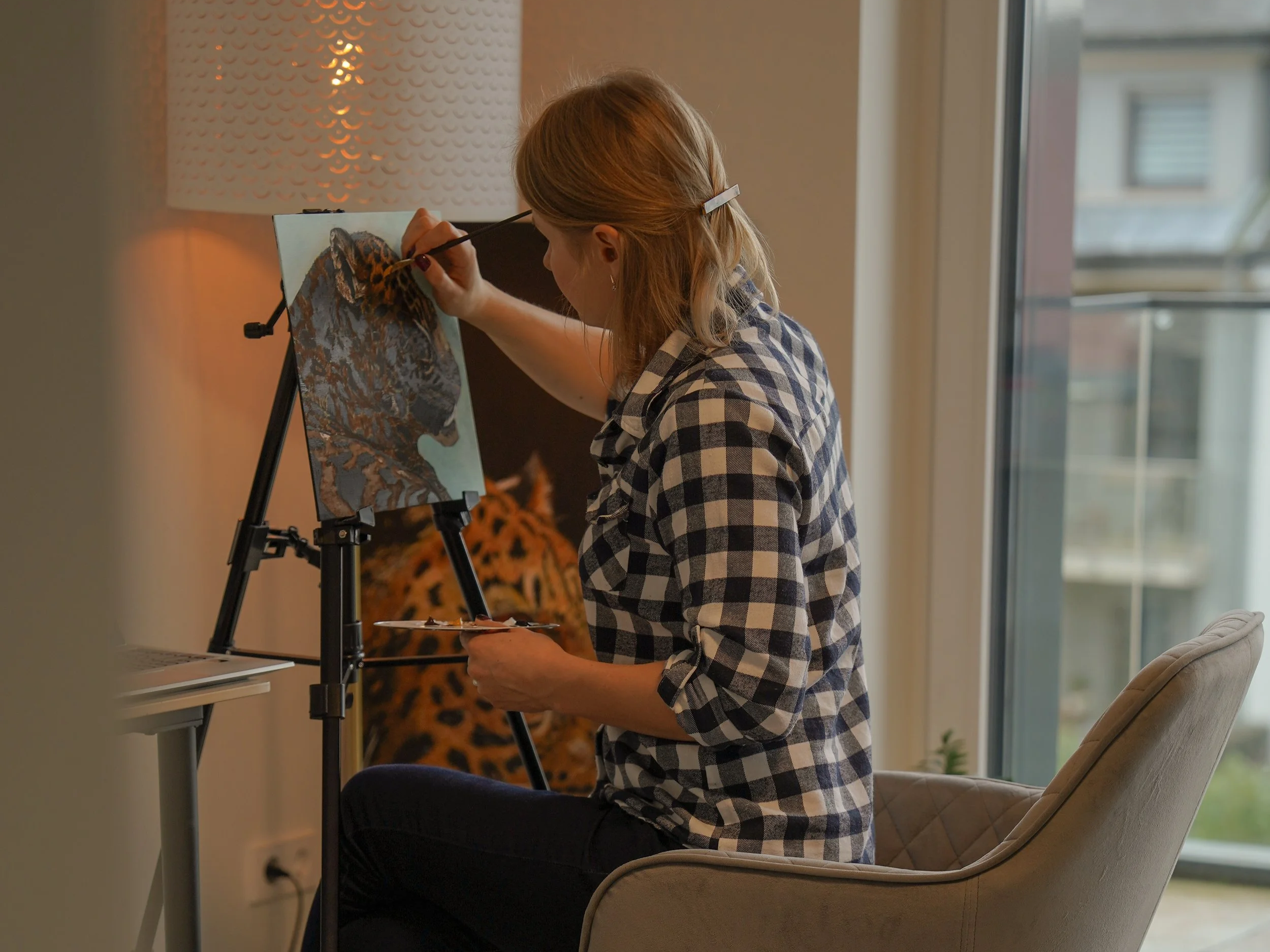
It is all about relentless practice
Guide to Skills, Stages of Growth, and the Courage Behind the Canvas
Key Takeaways
Becoming a wildlife artist is not about talent - it requires patience, emotional depth, and long-term dedication.
Artists grow through different stages: discovery, technique, emotional connection, and personal style.
Wildlife art demands observation, discipline, and the ability to capture spirit, not just form.
In today’s fast-paced world, choosing the path of an artist takes courage and conviction.
Learn what skills are essential, how artists evolve, and why wildlife art resonates with powerful individuals.
Introduction: Beyond Talent - The Real Journey of a Wildlife Artist
There is a recurring thing I hear from people seeing detailed and close-to-realism artworks - they say that artist has a talent. That is a myth, and most of the artists will tell you this. While some people indeed may have a natural eye or intuitive sense of composition, talent alone is never enough. Art, as any artisan work, requires loads of patience, resilience and dedication, especially through the monotonous parts of work, when routine and boredom kick in.
Personally for me it takes very long hours to capture anatomy and proportions of the animals correctly, let alone lights and shadows, and creating correct color tones. But beyond the technical side of the painting - there is more. There is symbolism, there is spirit of the animal. How to even capture that?! For me, the spirit of the animal and its character comes through its eyes, gaze and posture, through movement (if it is even possible to reflect that in a still picture). People have assigned bold character traits to the wild animals through centuries - courage, focus, and transformation - that came from observations of what the animals embody and how they behave.
In a world that values speed, certainty, and commercial success, dedicating yourself to slow, intentional creation is a radical choice. Hence I believe that choosing to become an artist today is an act of bravery. It means trusting your own voice, honoring the process, and believing that work matters - even when the world isn’t watching.
How Artists Grow: Stages of Artistic Development
Just like mastering any other craft, becoming an artist unfolds in stages. Each phase brings new challenges, breakthroughs, and emotional growth. There’s no fixed timeline - some artists move quickly, others take years. As I discovered it - what matters most is consistency, curiosity, and the willingness to evolve.
Stage 1: Discovery and Observation
This is where the journey begins. You experiment and learn from watching other artists paint. You make plenty of mistakes. And you absorb everything you can - from learning about paints, tools and techniques, to different styles and mediums.
Learning basic proportions and structure
Practicing brush control and color mixing
Studying reference photos
Exploring different mediums and styles
This stage is often filled with frustration and excitement. You’re building the foundation, even if the results feel far from your vision.
Stage 2: Technique and Emotional Connection
Once the basics are in place (and that might take years!), you begin refining your technique - seeing what works best and how to paint more efficiently, how to create visual effects that make the difference in the artwork. These seemingly small things often play a crucial role of how people perceive your paintings. For example, you might have spent hours and hours working on the background details, but you hear that people actually want no background as it distracts them from the main subject - you take this feedback and proceed.
Developing texture and layering skills
Understanding light, shadow, and depth
Capturing mood and presence in the animal’s gaze
Creating compositions that tell a story
This is when your work begins to feel more alive.
Stage 3: Personal Style and Symbolism
At this point, your art starts to reflect your voice. You choose animals not just for their beauty, but for what they represent. You begin to explore themes.
Creating series or themed collections
Painting from intuition and memory (if you are really talented!)
Infusing symbolism and psychological depth
Receiving professional feedback and refining your message
Stage 4: Mastery and Impact
This stage is about refinement and resonance. Your work begins to influence others. Collectors respond not just to your technique, but to the emotion and meaning behind each piece.
Exhibiting work and building a collector base
Teaching or mentoring others
Collaborating with galleries or institutions
Using art to inspire, provoke, or protect
How Long Does It Take?
I don’t know yet. I’m still at the beginning of this path. Every day I learn something new. Every painting teaches me something deeper. For me art is not a destination, it is a process, which I enjoy deeply. And I’m just getting started on this beautiful path.
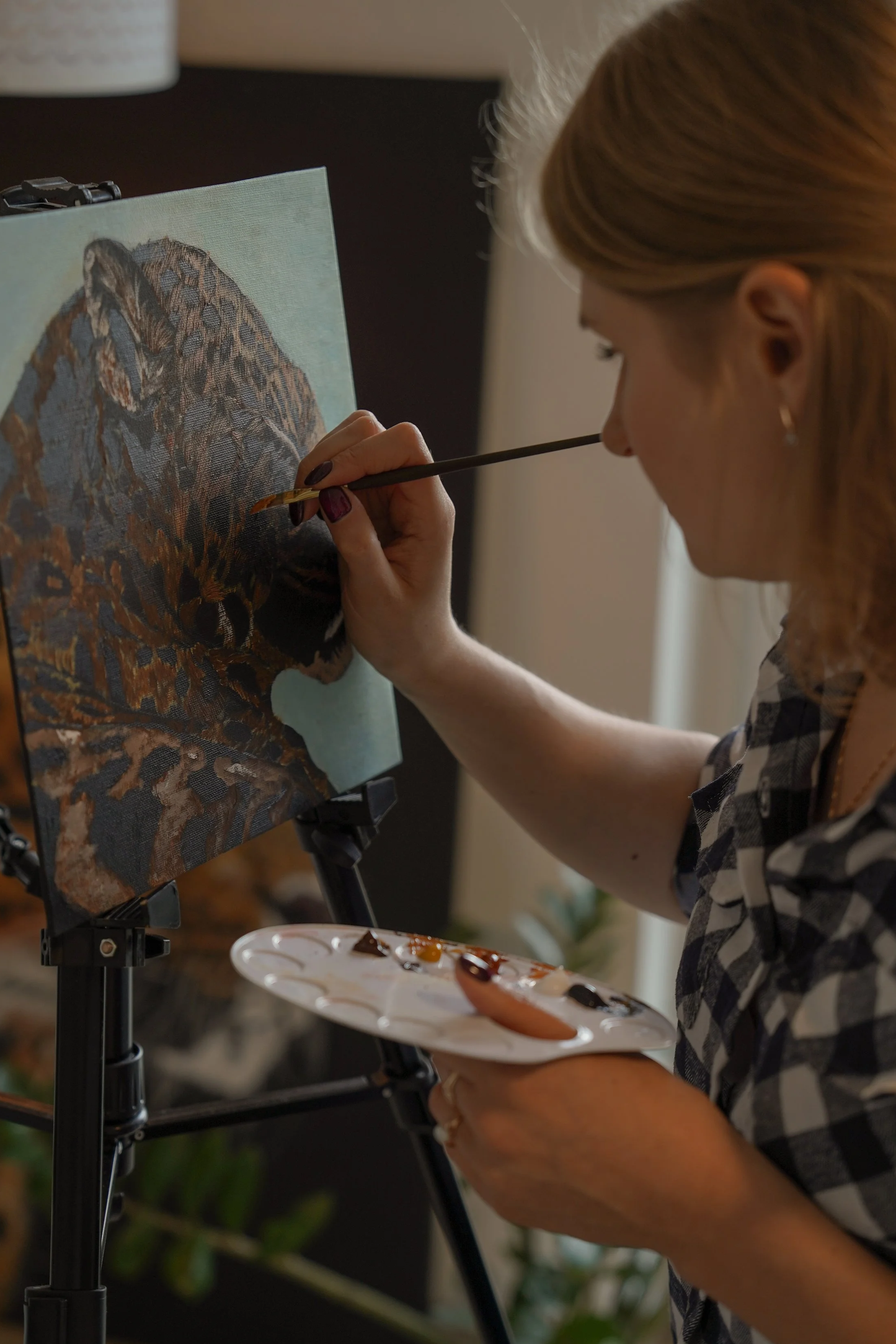
Working on getting the direction of fur right as to reflect folds on leopard’s skin
Essential Skills for Wildlife Artists
Wildlife art combines technical mastery with emotional intelligence. Here are the core skills every wildlife artist must develop:
Observation
Study animal movement, behavior, and anatomy
Observe in nature or through references
Learn from experienced artists
Patience
Wildlife painting involves layering, drying, and revisiting
Mistakes are frequent, and progress is slow
Patience builds resilience and depth in your work
Emotional Connection
Understand what each animal represents, learn about symbolism
Paint not just what you see, but what you feel
Technical Mastery
Brush control, color mixing, and texture rendering
Composition, contrast, and focal point management
Storytelling and presentation for collectors and galleries
The Courage to Be an Artist Today
In a world driven by speed and expecting momentous results, choosing to be an artist is a courageous act. Creation of artwork, especially close-to-realism art, takes a lot of time. When the market is flooded with abstract art (nothing against it, of course, it has its own beauty), taking tens of hours to just paint every single fur, every single feather and all the details in the animals eye can be viewed as a crazy act - why to do it, if you can just make a photograph?! Yes, indeed… but when you come to the art galleries and look at the hyper realistic paintings by the classic artists, you sense something within you, something that is far beyond just looking at the picture, you have a sensation of the higher power. When I paint my artworks and when I finish, I often look at them and cannot believe they came into life through my hands. I have no academic education, how is this even possible? Not to start sounding weird, but I sometimes feel that there is a force far greater than my pity self working through my hands and I chose to be at its full service because of how creating art makes me feel. Being an artist today means embracing uncertainty, trusting instincts, and creating from a place of inner knowing.
Why Wildlife Art Resonates with Leaders and Collectors
Power animals speak to those who lead, protect, and pursue excellence. Successful individuals often choose wildlife art because it mirrors their own mindset and what took them to their places in life:
Lions for confidence and leadership
Eagles for vision and sovereignty
Jaguars for bold action and transformation
Leopards for focus and discipline
Final Thoughts: The Journey Is the Art
Becoming a wildlife artist is not a sprint. It’s a lifelong relationship with nature, emotion, and self-expression. You don’t need to be born with talent - you need to show up, every day, with curiosity and courage. If you’re drawn to wildlife art, it’s likely because something inside you resonates with the wild. That’s where the journey begins. Explore my collection of works so far to see how power animals come to life on canvas and how they might speak to your own story.